Contact Colorado FIRST
Reach out before registering or purchasing equipment. We can answer questions, explain the process, and connect you with experienced Colorado teams and mentors.
Talk to Colorado FIRSTFIRST ROBOTICS COMPETITION

FRC teams change lives. We are here to help you start strong, build a sustainable program, and create an amazing experience for your students.
BUILD YOUR FOUNDATION
Starting an FRC team is easier when you take it one step at a time. Colorado FIRST can help you connect with mentors, understand the costs, locate resources, and prepare for your first season.
Reach out before registering or purchasing equipment. We can answer questions, explain the process, and connect you with experienced Colorado teams and mentors.
Talk to Colorado FIRST →Recruit interested students, at least two committed adult lead mentors, and additional adults who can support technical work, administration, fundraising, and travel.
Review team needs →Secure a safe, dependable location where students can meet, store equipment, build, program, and test the robot throughout the season.
Workspace guidance →Estimate registration, robot parts, tools, transportation, meals, lodging, and other season expenses. Then begin building a sustainable fundraising plan.
Budget and fundraising →Create the team through the FIRST Dashboard, add the required lead mentors, complete team information, and pay the season registration fee when ready.
Register with FIRST ↗Train students, establish team systems, attend events, connect with mentors, and begin the season with a clear plan for designing and building your robot.
View the season timeline →Focus on building a safe, organized, sustainable team. A simple, reliable robot and a positive student experience are stronger first-season goals than trying to accomplish everything at once.
A successful rookie season begins well before kickoff. Use this timeline to plan recruiting, fundraising, training, robot development, and competition.
Recruit students and mentors, confirm your host organization, secure a workspace, create a budget, and begin fundraising.
Register the team, train students in safety and technical skills, build team systems, attend offseason events, and continue fundraising.
FIRST releases the season game, rules, field information, and challenge. Teams begin strategy, prototyping, and robot design.
Students prototype mechanisms, manufacture parts, wire and program the robot, test systems, practice driving, and improve reliability.
Attend qualifying events, work with alliance partners, present awards, celebrate the season, and identify improvements for next year.
Strong FRC teams combine technical learning with good organization, student leadership, community support, and long-term planning.
Connect with Colorado FIRST, experienced teams, mentors, schools, sponsors, and community partners. Join our local SLACK channel, sign up here.
Decide what success means for your team each season. Focus on realistic technical, organizational, fundraising, outreach, and student-development goals.
Give students meaningful responsibility in engineering, programming, business, strategy, outreach, and leadership. Mentors should guide the work without taking it away from students.
Document team procedures, safety practices, budgets, designs, code, sponsor contacts, and lessons learned. Good systems make the team easier to manage and help knowledge carry forward.
Recruit new students and mentors each year, develop multiple funding sources, prepare future leaders, and create a plan that allows the team to remain strong beyond one season.
DEVELOP YOUR MENTORS
Strong mentors create safe, organized, student-centered teams. FIRST and Colorado FIRST provide training to help new and experienced mentors understand their responsibilities, strengthen team practices, and confidently support students.
FIRST Mentor Ready is a four-part interactive training path for coaches and mentors. It provides foundational knowledge for leading students, protecting participant information, and creating a safe and inspiring team experience.
Learn about the FIRST mission, ethos, Core Values, and the mentor’s role in creating an inspiring student experience.
Review participant safety, appropriate boundaries, reporting responsibilities, and expectations for maintaining a safe team environment.
Annual renewalUnderstand how to responsibly handle student, parent, mentor, roster, registration, and team information.
Renew every two yearsExplore student-centered mentoring, appropriate mentor involvement, team leadership, communication, and effective support practices.
COLORADO-SPECIFIC SUPPORT
Continue your development with Colorado-specific mentor resources, workshop recordings, team-management guidance, technical training, seasonal updates, and materials shared by experienced Colorado mentors.
Ask every lead coach and mentor to complete FIRST Mentor Ready, then use the Colorado FIRST classroom for ongoing learning throughout the season. Review youth protection, safety, and mentor expectations with the full adult team before regular student meetings begin.
PLAN FOR SUSTAINABILITY
This example represents a developing FRC team attending one local Regional Event, operating from a basic workshop, and building a practical first-season robot. Actual costs will vary based on location, team size, travel, donated resources, and the complexity of the robot.
| Budget Item | Planning Notes | Estimated Cost |
|---|---|---|
| Competition and Registration | ||
| FIRST season registration Core expense | Includes the initial FRC registration package and participation in one Regional Event for a Regional team. | $6,500 |
| Registration-related costs | Shipping, payment fees, required documents, and other small registration expenses. | $300 |
| Robot, Field and Workshop | ||
| Additional robot parts Core expense | Motors, controllers, structural materials, hardware, electrical components, sensors, and replacement parts beyond the Kit of Parts. | $3,000 |
| Spares and batteries | Spare electrical components, additional batteries, chargers, wheels, belts, chain, fasteners, and common replacement items. | $1,200 |
| Prototyping and practice field | Wood, plastic, fasteners, game pieces, carpet, and simple field elements used for testing. | $500 |
| Basic workshop tools Startup cost | Hand tools, cordless tools, drill press or saw access, measuring tools, workbenches, storage, and basic electrical equipment. | $2,500 |
| Safety equipment | Safety glasses, first-aid supplies, hearing protection, gloves, guards, signage, and other shop-safety items. | $400 |
| Workspace and utilities | Modest annual allowance for space use, utilities, cleaning, storage, internet, or facility support. Enter $0 when space is donated. | $1,200 |
| Team Operations and Event Participation | ||
| Local transportation | Bus, van, trailer, fuel, parking, and local travel for one three-day Regional Event. | $1,200 |
| Event meals and snacks | Basic meals, water, snacks, and hospitality for students and adult mentors during the Regional. | $1,200 |
| Team shirts and identification | Team shirts, mentor shirts, name badges, pit signage, banners, and simple branding materials. | $600 |
| Business and outreach | Website, printing, sponsor materials, outreach supplies, awards preparation, and presentation materials. | $500 |
| Administration and insurance | Banking, accounting, background checks, insurance, licenses, software, or host-organization expenses. | $500 |
| Contingency and next-season reserve Recommended | Covers unexpected repairs or cost increases and provides a small starting balance for the next season. | $1,000 |
| Estimated Annual Total | $0 | |
Review current FIRST pricing and adjust every line for your team’s actual location, resources, goals, and travel requirements.
START WITH THE SPACE YOU HAVE
An FRC workspace does not need to begin as a complete machine shop. A safe room with sturdy tables, secure storage, electrical power, internet access, and a small collection of dependable tools can provide a strong starting point.
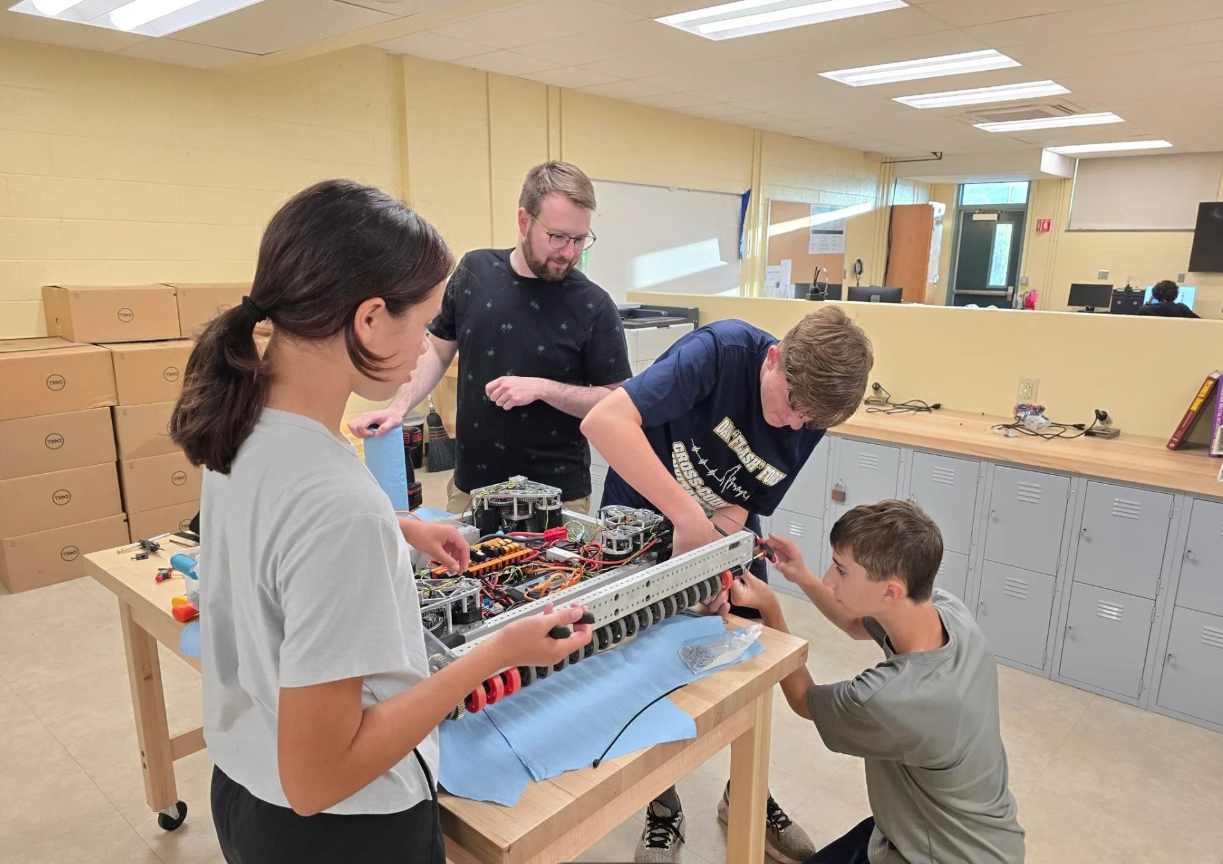
Sturdy worktables, adequate lighting, clear walkways, ventilation, and adult supervision.
Lockable space for the robot, batteries, tools, electronics, materials, and student work.
Hand tools, cordless drills, measuring tools, a workbench, electrical tools, and safe cutting access.
Reliable electrical outlets, charging areas, internet access, and computers for programming and design.
One or two sturdy tables with enough open space to assemble mechanisms and work safely around the robot.
A cleaner table with computers, internet access, chargers, robot controls, and room for electrical work.
Labeled bins, shelves, battery storage, tool organization, and secure space for valuable equipment.
Create written shop rules, train students before they use tools, require appropriate protective equipment, and maintain clear adult supervision. Add tools gradually as training, space, and funding increase.
COMMON QUESTIONS
Every team begins with different students, resources, facilities, and community support. These answers provide a practical starting point for planning and managing an FRC team.
No. Many teams are school-based, but teams may also operate through nonprofit organizations, community groups, homeschool organizations, businesses, or other appropriate host organizations. The host should be able to support finances, adult supervision, meeting space, and team administration.
A developing team can begin with a committed core group. Approximately 10–20 students is a practical starting range, although teams may be smaller or much larger. More important than the exact number is having students who attend consistently and participate in different areas of the team.
Plan for at least two dependable adult lead mentors or coaches. Additional adults are strongly recommended for technical work, fundraising, finances, communications, transportation, safety, and parent coordination. Avoid placing every responsibility on one person.
No. Students and mentors can learn as the team develops. Helpful mentor backgrounds include engineering, programming, construction, manufacturing, project management, fundraising, communications, education, business, and youth leadership. Commitment and a willingness to learn are more important than arriving with every technical skill.
Costs include season registration, robot materials, tools, transportation, meals, apparel, outreach, and possible lodging. The total varies significantly depending on travel, donated space, sponsor support, and equipment already available.
Use the example budget on this page as a planning guide and confirm current registration pricing directly with FIRST.
View the example FRC budget →No. A beginning team can work successfully with sturdy tables, secure storage, hand tools, cordless drills, measuring tools, computers, and access to safe cutting and fabrication equipment. Additional equipment can be added over time or accessed through schools, sponsors, makerspaces, and established teams.
Review workspace guidance →Begin as early as possible, ideally during the spring or summer. This provides time to recruit students and mentors, establish finances, secure workspace, fundraise, register, train students, and build team systems before the January game kickoff.
View the FRC season timeline →The time commitment varies throughout the year. Teams may meet once or twice per week during the offseason and more frequently after kickoff. During build and competition season, teams often add evenings or weekends. Establish a schedule that is ambitious but sustainable for students, families, and mentors.
Yes. FRC teams need students in mechanical design, programming, electronics, CAD, strategy, media, photography, video, outreach, fundraising, sponsor relations, finance, awards, scouting, project management, and leadership. The strongest teams provide meaningful roles across technical and nontechnical areas.
Colorado FIRST can help connect your team with experienced mentors, established teams, workshops, training resources, event information, and statewide support. Ask for help early, especially before registration, major purchases, or your first competition.
Contact Colorado FIRST →